How to Choose Your First Prayer Rug: A Simple Guide for a Meaningful Start
Choosing your first prayer rug (or Sajjadah) is a beautiful and significant step in anyone’s spiritual journey. More than just a piece of fabric, it becomes a dedicated space for connection, a personal sanctuary for your daily prayers (Salah), and a silent companion in your devotion. With countless options available, the process can feel overwhelming. This comprehensive guide is designed to walk you through every consideration, helping you find a rug that resonates with your heart, supports your practice, and serves you faithfully for years to come.
Understanding the Significance: More Than a Mat
Before diving into the practical aspects, it’s essential to appreciate the spiritual role a prayer rug plays. In Islam, cleanliness and dedicated space are integral to worship. The prayer rug:
· Delineates a Pure Space: It provides a clean, physical barrier between you and the ground, fulfilling the requirement for a tidy place of prayer, whether you’re at home, work, or traveling.
· Cultivates Focus: By unrolling the same rug in your dedicated prayer corner, you create a ritual. This simple act signals to your mind and heart that it is time to transition from worldly affairs to spiritual communion.
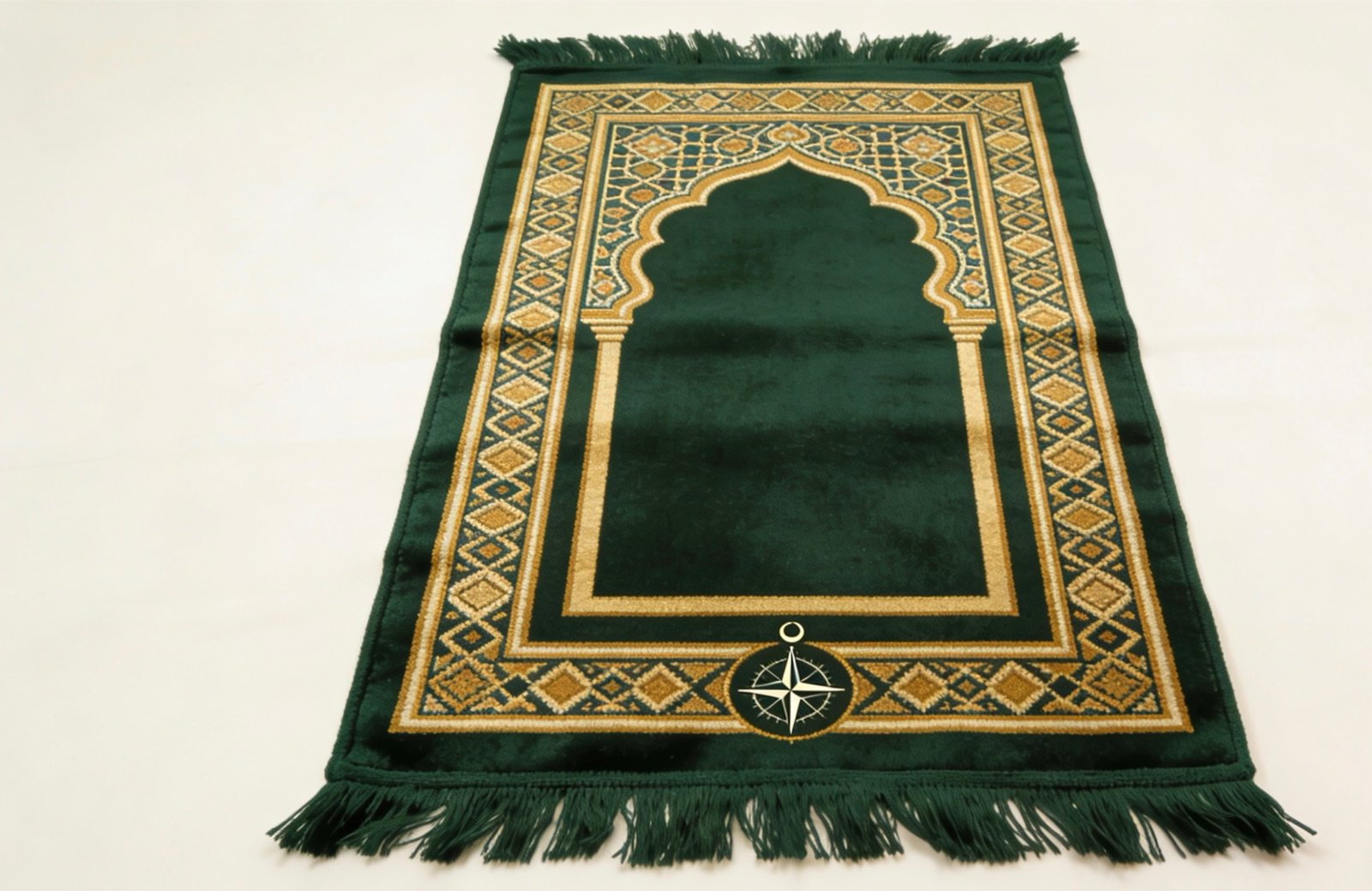
· Serves as a Spiritual Tool: The design elements—especially the Mihrab (prayer niche arch) and compass—are not mere decorations. They are visual guides that orient your body and soul towards the Qibla (the direction of the Kaaba in Mecca), unifying your prayer with the global Muslim community.
Your first rug is where you will kneel, prostrate, and find peace. It should feel uniquely yours.
Key Factors to Consider When Choosing
1. Size & Portability: Fitting Your Space and Life
Prayer rugs come in various sizes, and the right one depends on your primary use.
· Standard Size (Approx. 100cm x 150cm / 40″ x 60″): This is the most common and recommended size for an average adult. It provides ample room to stand, kneel, and prostrate comfortably without feeling constrained. Ideal for a permanent prayer spot at home.
· Travel Size (Approx. 70cm x 110cm / 28″ x 43″): Compact, lightweight, and often made with thinner materials for easy folding and packing. A travel rug is a must-have for students, frequent travelers, or anyone who prays outside the home. Look for ones that come with a carrying strap or pouch.
· Large/Extra-Long: Some prefer longer rugs that offer more coverage, especially for the prostration position, or for taller individuals.
Action Tip: Measure the space where you plan to pray most often. Perform a simple prayer motion to ensure the area is comfortable and unobstructed.
2. Material & Comfort: The Foundation of Your Practice
The material determines the rug’s feel, durability, and ease of care. This is where your personal comfort is paramount.
· Cotton: The classic choice. Breathable, soft, and naturally absorbent. High-quality, tightly woven cotton is durable and provides excellent comfort for your forehead during Sujood (prostration). It’s suitable for all climates and feels grounded and traditional.
· Velvet/Microfiber: Offers a plush, luxurious feel. It’s exceptionally soft to the touch and provides extra cushioning for knees and feet. This material is warmer, making it a cozy choice for cooler climates or prayer rooms. It often has a beautiful, deep color saturation.
· Silk & Blends: Silk rugs are rare and prized for their exquisite sheen and smoothness. More commonly, you’ll find silk-cotton blends that offer a touch of luxury and softness without the high cost and delicate care of pure silk.
· Synthetic (Polyester, Acrylic): Highly affordable, stain-resistant, and often very vibrant in color. They can be less breathable than natural fibers. Quality varies greatly, so check the weave density.
The Feel Test: If you can, physically touch different materials. Close your eyes and imagine your forehead resting on it during prayer. Does it feel comforting?
3. Design & Visual Focus: Inspiration vs. Distraction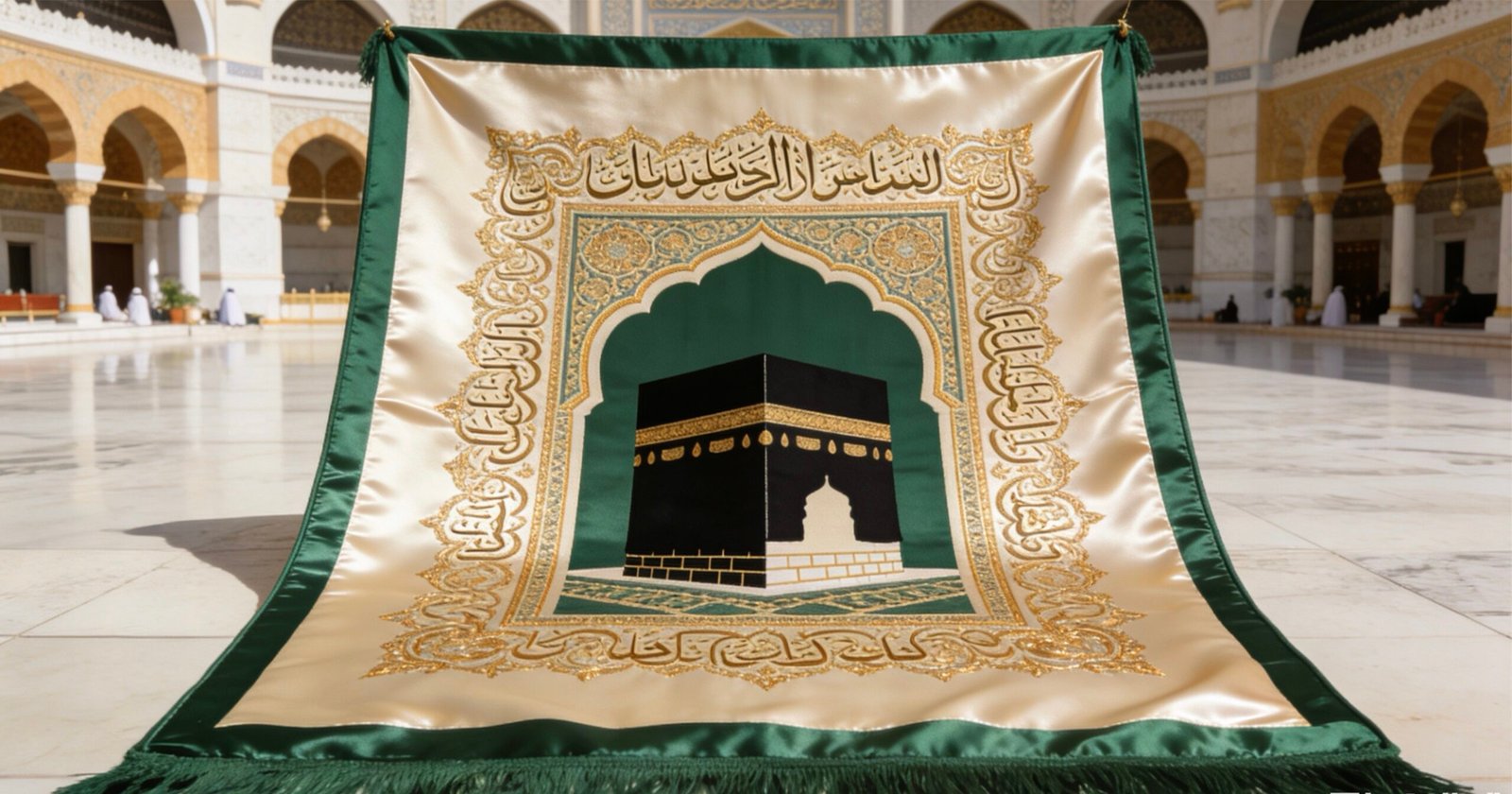
The design can enhance your spiritual focus or inadvertently distract from it. Consider what draws your heart inward.
· The Mihrab (Prayer Niche): This arch at the top of the rug is non-negotiable for many. It symbolically represents the arch in a mosque pointing towards Mecca and physically frames your space during prayer. Ensure it is symmetrical and pleasing to your eye.
· The Qibla Compass: This is arguably the most crucial feature for a first prayer rug. Many modern rugs have a small, accurate compass sewn into the Mihrab or the rug’s top border. It eliminates guesswork, ensuring your direction is correct—a huge relief for new Muslims and travelers.
· Patterns & Imagery:
· Geometric & Arabesque: Islamic art is famed for its intricate geometric patterns and flowing floral designs (arabesque). These are timeless, culturally rich, and can aid concentration as they symbolize the infinite nature of creation.
· Architectural Motifs: Images of the Kaaba, the Al-Masjid an-Nabawi in Medina, or the Dome of the Rock are powerful visual reminders. Choose a high-quality print that is respectful and not garish.
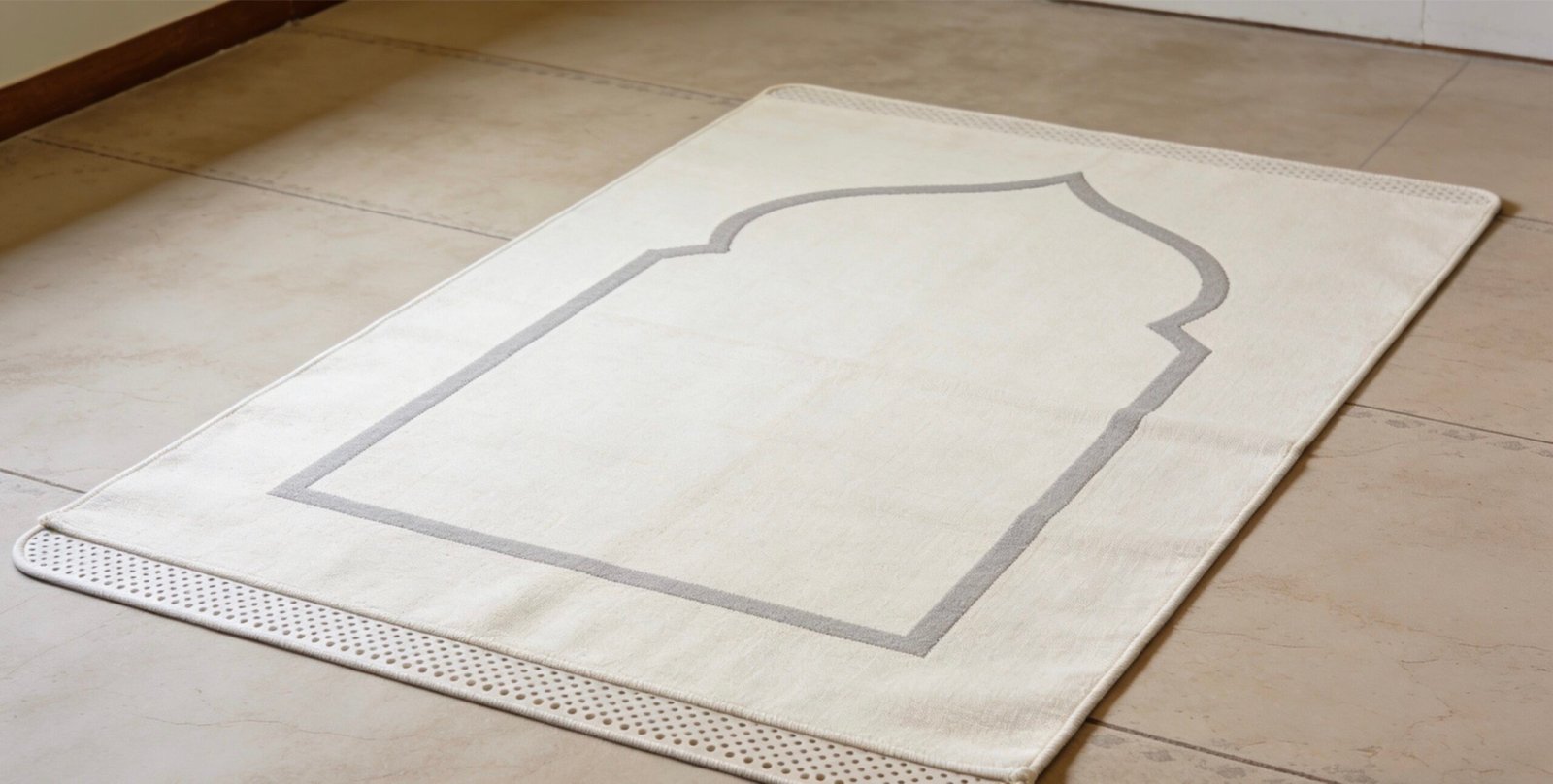
· Minimalist & Solid Colors: A simple, solid-colored rug with only a subtle Mihrab outline is an excellent choice for those who seek absolute minimalism. It reduces visual noise, allowing for deeper internal focus.
· Color Psychology: Colors affect mood. Soft greens and blues are calming and associated with paradise. Deep reds and burgundies feel warm and traditional. Creams and whites evoke purity and simplicity. Choose a color that brings you a sense of tranquility.
4. Practicality & Care: A Companion for Daily Life
Your rug will be used frequently, so practical considerations are key.
· Ease of Cleaning: Will you vacuum it, shake it out, or need to wash it? Cotton and synthetic rugs are often machine-washable (check the label!). Velvet may require spot cleaning or professional care. A washable rug is a practical blessing.
· Non-Slip Backing: For safety and to keep the rug from bunching up during prayer movements, a non-slip rubber or latex backing is invaluable, especially on hardwood or tile floors.
· Durability: Check the edge binding (the stitched border). Tight, overlocked stitching prevents fraying. A higher knot or thread count generally indicates a longer-lasting rug.
A Step-by-Step Guide for the First-Time Buyer
1. Reflect on Your Primary Need: Is this for a home prayer corner (prioritize comfort, size, beauty) or for versatility/travel (prioritize portability, a built-in compass, durability)?
2. Set a Realistic Budget: Prayer rugs range from very affordable to heirloom-quality pieces. A good-quality first rug doesn’t have to be expensive. Invest in something well-made that you will cherish.
3. Feel the Connection: Look at images online, but if possible, visit an Islamic bookstore or shop. Touch the materials. Unroll it. See which one calls to you.
4. Verify the Qibla Indicator: If you are unsure about your prayer direction at home or plan to travel, a rug with a reliable, sewn-in compass is the wisest first purchase.
5. Read Reviews: See what other buyers say about the rug’s softness, color accuracy, and durability over time.
Caring for Your Spiritual Companion
Treating your rug with respect extends its life and honors its purpose.
· Regular Maintenance: Gently shake it out or use a vacuum cleaner on a low setting without a beater bar to remove dust.
· Cleaning: Follow the manufacturer’s instructions. For machine washable rugs, use cold water on a gentle cycle with mild detergent. Air dry flat; avoid direct sunlight for long periods to prevent fading.
· Storage: When not in use, roll it up carefully (don’t fold it tightly, as this can crease the fabric) and store it in a clean, dry place. Many rugs come with a convenient carrying strap.
Conclusion: The Beginning of a Sacred Relationship
Your first prayer rug is the foundation of your personal musalla (prayer space). There is no single “perfect” rug, but there is a perfect rug for you—one that meets your practical needs and speaks to your spirit.
Don’t get paralyzed by the choice. Let your intuition guide you. The “right” rug will be the one you look forward to unrolling, the one that makes your dedicated prayer space feel complete. It will witness your struggles, your gratitude, and your growth. In its threads, you will weave the beginning of a deeper, more consistent, and focused connection.
May your search be easy, and may the rug you choose be a source of comfort and a faithful partner in your prayers for many years to come. Ameen.